M/ein Blog ist m/ein Kartenraum und k/eine Bühne. Ich weiss wie man publiziert. Das hier ist etwas anderes. d!a!n!k!e | WORK IN PROGRESS reload für aktuellen Schreibstand | Warum ich nicht publiziere? Weil ich es kann. Weil es geht. Weil ich es für angemessen halte.
Irgendwas mit sehr viel Dringlichkeit. (so?)

Das Treiben der Welt beobachten. Aber danach ganz eigen reagieren. Für unser Alpental ist das ganz normal: 1424, 1524, 1695, 1877 und jezt auch wieder (so?)
Interstellar vernetzt. Lokal resilient. (so?)
2030.AutarkieIndex.org
7. Juli 2026 | Machbarkeitsstudie #AutarkieIndex
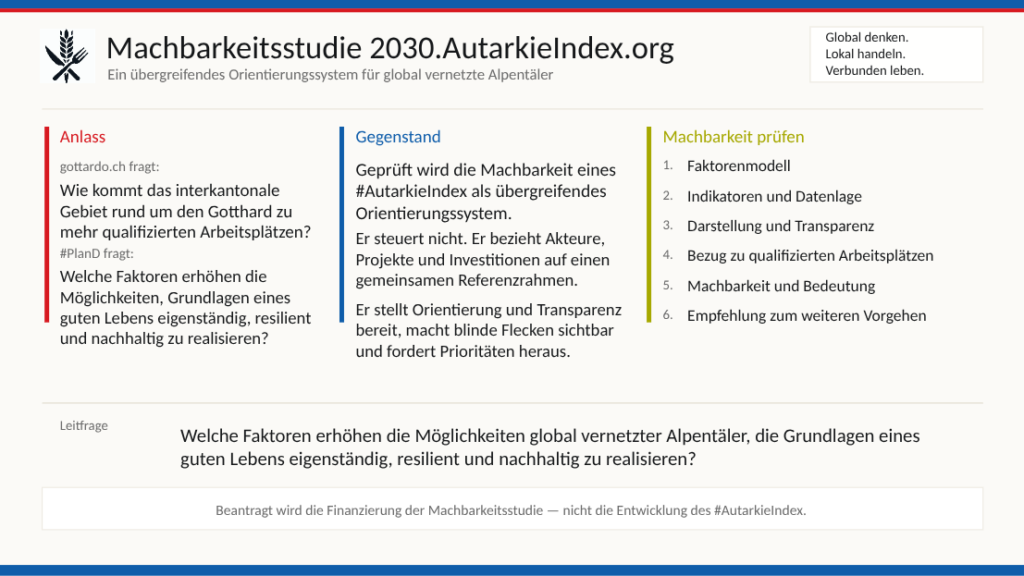
Welche Fragen muss eine Machbarkeitsstudie beantworten, um die Idee von einem #AutarkieIndex umsetzen zu können?
Zusammenarbeit mit: Prof. Dr. Nico Tschanz (Leitung: Ideeninkubator ‘Natürliche Ressourcen’) und Dr. Nadja Germann (Leitung Programm San Gottardo): gottardo.ch/innovation | History der Projektentwicklung unter dissent.is/PlanD | Mögliche Partnerschaften für die Machbarkeitsstudie:
- Zentrum für Verwaltungsmanagement (angefragt)
- Reallabore der FH Graubünden (angefragt)
- Feedback von Dr. Gion Salm (11.07.26)
- …
1. Anlass
Gottardo.ch stellt u.a. die Frage:
Wie kommt das interkantonale Gebiet rund um den Gotthard zu mehr qualifizierten Arbeitsplätzen?
#PlanD stellt u.a. die Frage:
Welche Faktoren erhöhen die Möglichkeiten von global vernetzten Alpentälern, Grundlagen für “ein gutes Leben” wiederum eigenständig, resilient und nachhaltig zu realisieren?
Erklärungen: #PlanD steht in einer sozialpolitischen Tradition der Cadi/Surselva, die seit 1877 – unter dem Eindruck der zweiten industriellen Revolution, «Mechanisierung» nun der «Maschinisierung» – nicht bereit war, zwischen der dominanten Optionen «Staat» (Sozialismus, links) und «Markt» (Liberalismus, rechts zu) wählen. In derselben Logik unterstützt #PlanD unter den Bedingungen der vierten industriellen Revolution – nach der «Automatisierung» nun der «Digitalisierung» – auch nicht den seit 1977 verfolgten neoliberalen Versuch, «Staat und Markt» zu wählen.
Die Machbarkeitsstudie untersucht, wie die zweite Frage auch Orientierung für die erste eröffnen kann. Sie prüft insbesondere, ob dadurch regionale Verwundbarkeiten, ungenutzte Möglichkeiten und Potenziale für zusätzliche regionale Wertschöpfung sichtbar werden.
2. Formales
Welche Trägerschaft muss Gottardo.ch angeboten werden, damit dies eine Machbarkeitsstudie finanzieren kann?
3. Gegenstand
Geprüft wird die Machbarkeit eines #AutarkieIndex als übergreifendes Orientierungssystem, das unterschiedliche Akteure, Projekte und Investitionen nicht steuert, sondern auf einen gemeinsamen Referenzrahmen bezieht.
Der #AutarkieIndex ist nicht das Ziel, sondern ein Instrument. Er soll sichtbar machen, wo Alpentäler verwundbar sind, welche regionalen Möglichkeiten ungenutzt bleiben und in welchen Bereichen Innovations‑, Investitions- und Wertschöpfungspotenziale bestehen.
Die Machbarkeitsstudie untersucht, ob die Erweiterung regionaler Möglichkeiten zur Entstehung qualifizierter Arbeitsplätze beitragen kann. Im Zentrum stehen dabei die Möglichkeiten, die Grundlagen «eines guten Lebens» wiederum eigenständig, resilient und nachhaltig zu realisieren.
Während andere Akteure entwickeln, investieren und umsetzen, stellt der #AutarkieIndex Orientierung und Transparenz bereit. Er macht blinde Flecken sichtbar, irritiert bestehende Entwicklungslogiken und fordert ihre Prioritäten heraus.
Der Index priorisiert Projekte nicht im Sinne einer zentralen Steuerung. Er schafft eine transparente Grundlage, auf der unterschiedliche Akteure eigene Prioritäten setzen und begründen können.
4. Legitimation
Der #AutarkieIndex führt nicht einfach eine weitere Bewertung ein. Er macht transparent, wie Regionen, Projekte und Investitionen gegenwärtig beobachtet und bewertet werden, welche Funktionen diese Bewertungslogiken erfüllen und welche Möglichkeiten dabei unberücksichtigt bleiben.
Dabei folgt er einem transformativen Dreischritt:
Erinnern: Wie sind die bestehenden Bewertungslogiken entstanden?
Gedenken: Was haben sie ermöglicht, verdrängt oder verhindert?
Erneuern: Welche anderen Orientierungen und Handlungsmöglichkeiten werden sichtbar?
- Regurdar — Commemorar — Renovar. (Der transformative 3‑Schritt von #dfdu AG seit 2004)
- “The Next Organization Will Not Be Organized.” (Manifest #dfdu AG, 2017)
5. Leitfrage
Welche Faktoren erhöhen die Möglichkeiten global vernetzter Alpentäler, die Grundlagen eines guten Lebens wiederum eigenständig, resilient und nachhaltig zu realisieren?
- Handle so, dass mehr Möglichkeiten entstehen. (Heinz von Foerster)
6. Grundannahme
Eigenständigkeit entsteht nicht durch Isolation, sondern durch die Fähigkeit, globale Ressourcen lokal wirksam werden zu lassen.
- Global denken.
- Lokal handeln.
- Verbunden leben.
7. Die Machbarkeitsstudie liefert eine Entscheidungsgrundlage:
- Zweck und Begriffe
- Faktorenmodell
- Empfehlung der Indikatoren
- Datenlage
- Darstellungskonzept
- Bezug zu qualifizierten Arbeitsplätzen
- Aufwand, Partner und Kosten einer Umsetzung
- Einschätzung der Machbarkeit und Bedeutung
- Empfehlung zum weiteren Vorgehen

8. Fragen der Machbarkeitsstudie
- Welchen Zweck soll der #AutarkieIndex erfüllen?
- Was bedeuten Autarkie, Nachhaltigkeit und Resilienz in diesem Zusammenhang?
- Welche Grundlagen «eines guten Lebens» sollen berücksichtigt werden?
- Welche Faktoren erhöhen die Möglichkeiten global vernetzter Alpentäler, diese Grundlagen eigenständig, resilient und nachhaltig zu realisieren?
- Welche dieser Faktoren werden bereits heute beobachtet und von wem?
- Welche bestehenden Resilienz‑, Selbstversorgungs‑, Energieautarkie- und sektoralen Indizes können genutzt, verbunden oder weiterentwickelt werden?
- Worin liegt gegenüber bestehenden Ansätzen die spezifische Funktion eines regionalen #AutarkieIndex?
- Welche regionalen Verwundbarkeiten soll der #AutarkieIndex sichtbar machen?
- Welche Indikatoren können für die relevanten Faktoren entwickelt werden?
- Welche Indikatoren lassen sich zuverlässig beobachten und messen?
- Welche Daten sind bereits verfügbar?
- Welche Daten müssten neu erhoben werden?
- Wie können die Ergebnisse transparent, verständlich und vergleichbar dargestellt werden?
- Wie kann der Index sichtbar machen, wo regionale Wertschöpfungs‑, Innovations- und Investitionspotenziale bestehen?
- Wie können daraus mögliche Handlungsfelder priorisiert werden, ohne dass der Index selbst steuernd eingreift?
- Welcher Zusammenhang besteht zwischen regionaler Eigenständigkeit und der Entstehung qualifizierter Arbeitsplätze?
- Welche Orientierung kann der Index für Investitionen, Projekte und regionales Handeln bieten?
- Wo liegen die methodischen, wissenschaftlichen und praktischen Grenzen des #AutarkieIndex?
- Ist die Entwicklung und Umsetzung des #AutarkieIndex machbar?
- Welche Bedeutung könnte der #AutarkieIndex für den Gotthardraum, regionale Eigenständigkeit und die Entstehung qualifizierter Arbeitsplätze gewinnen?
Beantragt wird die Finanzierung der Machbarkeitsstudie, nicht die Entwicklung des #AutarkieIndex.
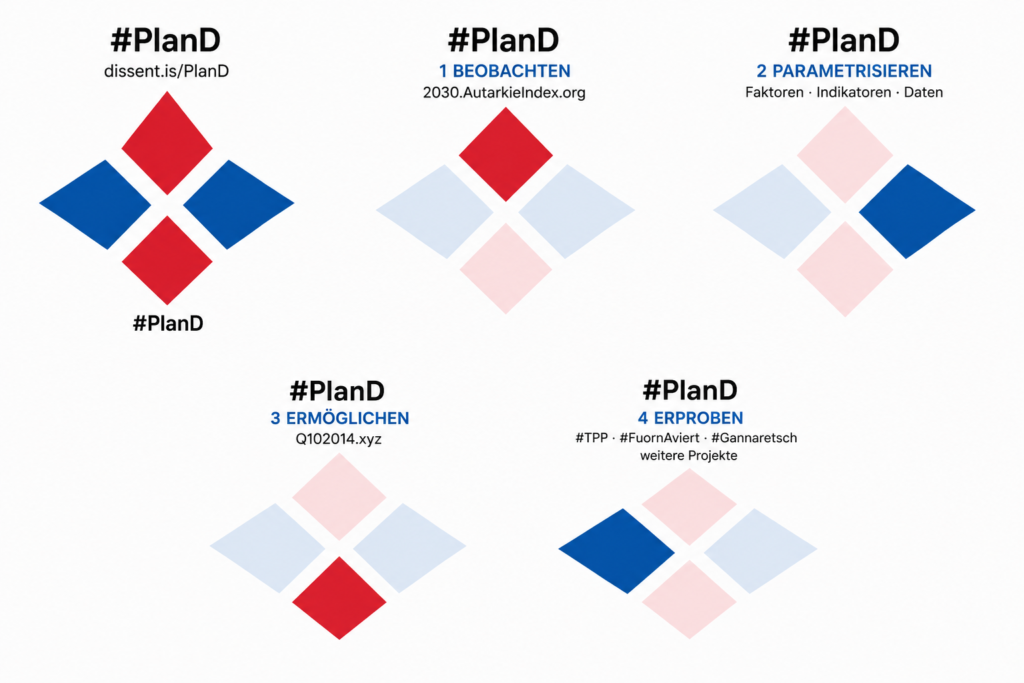













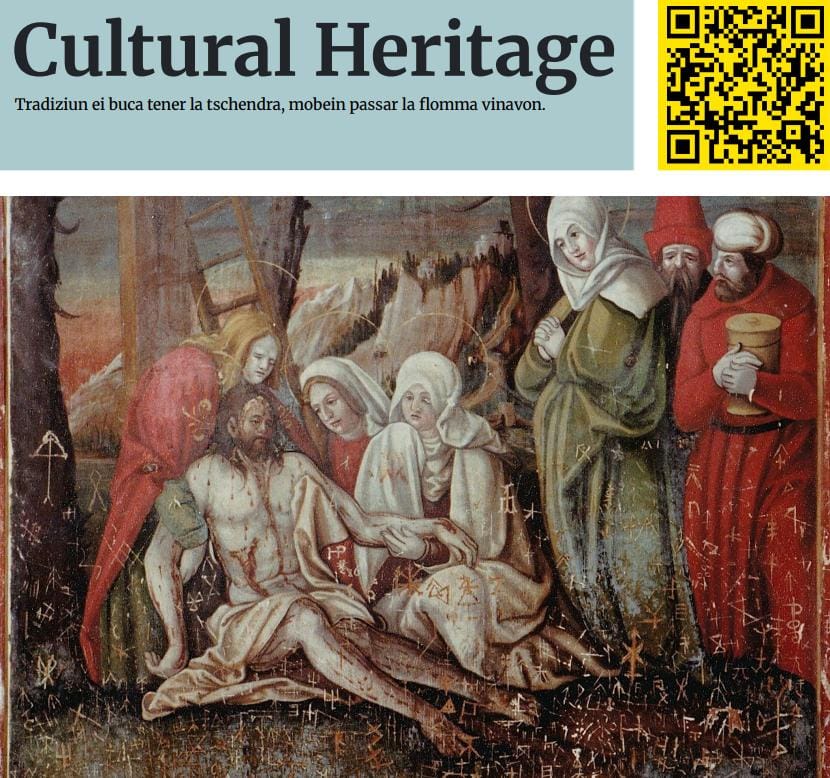


Frühere Volksinitiative #LebensraumAlpen
- neugieronautik.ch → Spielregeln klären
- AutarkieIndex.org → Orientierung ermöglichen
- Q102014.xyz → Infrastruktur gestalten
- vlog quotidian → WikiDienstag.ch
- blog quotidian → dissent.is/muster
- #RenescaCadi → Indizis locals tras il canal WhatsApp ;-)
- #dfdu ag dissent.is/muster konstellatorische kommunikation (working in a tendency)
Autarkie bedeutet nicht Abschottung, sondern Gestaltungsfähigkeit. Unser #AutarkieIndex misst, wie resilient, nachhaltig und herrschaftsfrei (xerokratisch) die Systeme in der Surselva sind – und unterstützt konkrete Entscheidungen, um diesen Zielen näherzukommen.
Zwei Fragen in der Vorbereitung auf das 6. Food Innovation Conference vom 18. Juni 2026 am GDI
jetzt kommen die fragen rein… ;-) pic.twitter.com/nmNdTuCZ35
— dissent.is/███████ (@sms2sms) April 23, 2026
work in progress? work within a tendency ;-)#IrgendwasMit2030 | https://t.co/rQt7RiZE8J | | @Graubunden | [6.7., 21:07] /sms -): Verkäuferlis gespielt. Von «weder Staat noch Markt» zu «Staat und Markt».
— dissent.is/███████ (@sms2sms) July 7, 2026
2018 lanciert der Kanton Graubünden das Programm graubündenVIVA. Mit rund 17 Millionen Franken öffentlicher Mittel… pic.twitter.com/vSs3tI4Wf0
- 2026: ready for #DDOS? den kulturellen, nicht den anderen ;-)
- 2026: #TheVeryRealCryptoMovement (making of…)
- 2025: Arbeitstand Oktober /PPB
- 2025: Arbeitsstand September /TTP, Plaid ePaun, …
- 2025: Wie ich mit ChatGPT arbeite
- 2024: Blockchain & Best Practices of Collaboration im Internetz
- 2020: Grundformen Sozialer Probleme
- 2009/2010: Die Form Der Unruhe, Junius Verlag Hamburg, 2 Bände

Irgendwas mit 2030
Agenda 2030
https://sdgs.un.org/2030agenda
Sustainable Development Goals 2030
https://sdgs.un.org/goals
Decade of Action 2020–2030
https://sdgs.un.org/decade-of-action
Education 2030
https://www.unesco.org/en/education2030-sdg4
OECD Education 2030
https://www.oecd.org/education/2030-project
Immunization Agenda 2030
https://www.who.int/teams/immunization-vaccines-and-biologicals/strategies/ia2030
Universal Health Coverage 2030
https://www.uhc2030.org
Global Biodiversity Framework 2030
https://www.cbd.int/gbf
UN Decade on Ecosystem Restoration 2021–2030
https://www.decadeonrestoration.org
2030 Climate Target Plan
https://climate.ec.europa.eu/eu-action/climate-strategies-targets/2030-climate-target-plan_en
Digital Decade 2030
https://digital-strategy.ec.europa.eu/en/policies/europes-digital-decade
2030 Digital Compass
https://digital-strategy.ec.europa.eu/en/policies/2030-digital-compass
Industry 2030
https://research-and-innovation.ec.europa.eu/research-area/industrial-research-and-innovation/industry-2030_en
Strategic Compass 2030
https://www.consilium.europa.eu/en/documents-publications/publications/strategic-compass-for-security-and-defence
NATO 2030
https://www.nato.int/nato2030
Armee 2030
https://www.vbs.admin.ch
Vision 2030
https://www.vision2030.gov.sa
Qatar National Vision 2030
https://www.gco.gov.qa/en/about-qatar/national-vision2030
Abu Dhabi Economic Vision 2030
https://www.aded.gov.ae/en/economic-vision-2030
Egypt Vision 2030
https://egypt2030.gov.eg
Kenya Vision 2030
https://vision2030.go.ke
Rwanda Vision 2030
https://www.minecofin.gov.rw
Shared Prosperity Vision 2030
https://www.epu.gov.my/en/shared-prosperity-vision-2030
National Development Plan 2030
https://www.gov.za/issues/national-development-plan-2030
Deutschland Nachhaltigkeitsstrategie 2030
https://www.bundesregierung.de/breg-en/issues/sustainability
Österreich Agenda 2030
https://www.bundeskanzleramt.gv.at/themen/nachhaltige-entwicklung-agenda-2030.html
Finnland Agenda 2030
https://kestavakehitys.fi/en/frontpage
Schweiz Agenda 2030
https://www.eda.admin.ch/agenda2030
Food Systems 2030
https://www.worldbank.org/en/programs/food-systems-2030
2030 Water Resources Group
https://www.2030wrg.org
Sustainable Mobility for All 2030
https://www.sum4all.org
Mission Innovation 2030
https://mission-innovation.net
Forest Vision 2030
https://www.1t.org
Race to Zero 2030
https://racetozero.unfccc.int
Net Zero 2030
https://www.un.org/en/climatechange/net-zero-coalition
Tourism Agenda 2030
https://www.unwto.org/tourism-for-sdgs
Chemicals and Waste Vision 2030
https://www.unep.org/explore-topics/chemicals-waste
Internet for All 2030
https://initiatives.weforum.org/internet-for-all
AI for Good 2030
https://aiforgood.itu.int
Hydrogen Europe Vision 2030
https://hydrogeneurope.eu
Circular Economy Action Plan 2030
https://environment.ec.europa.eu/strategy/circular-economy-action-plan_en
New European Bauhaus 2030
https://new-european-bauhaus.europa.eu
Global Goals Year 2030
https://www.globalgoals.org
Best practices for communication within communicative systems.
(Get the pdf ;-)
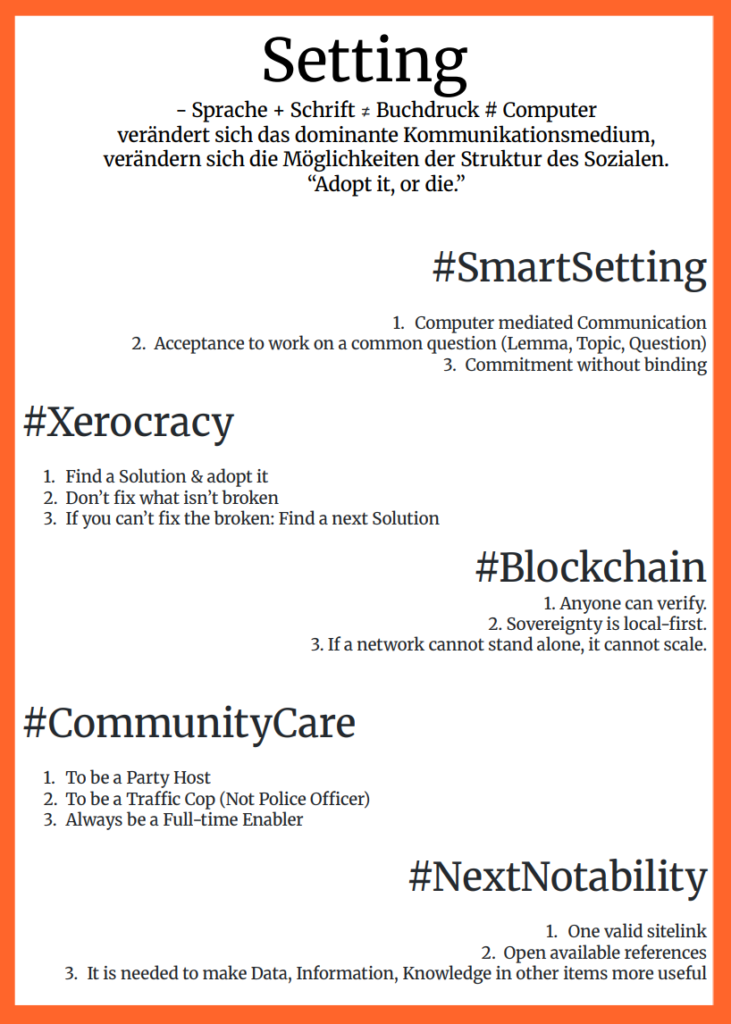
3 Dimensionen:
- Nachhaltigkeit – sichert lokale Kreisläufe und verankert sie in globalen Allianzen.
- Resilienz – sichert die Versorgung vor Ort und stärkt die Anpassungsfähigkeit im Wandel.
- Xerokratie – nutzt technische Möglichkeiten für transparente, herrschaftsfreie Organisation.

WERTE- & ENTWICKLUNGSQUADRAT
POSITIVER WERTE
- AUTARKIE
Fähigkeit eines Systems, sich selbst zu versorgen und handlungsfähig zu bleiben. - INTERDEPENDENZ
Bewusste, freiwillige Gegenseitigkeit u Austausch auf Augenhöhe.
ZERFALLSFORMEN
- AUTISMUS / ABSCHOTTUNG
Isolation, Selbstgenügsamkeit, Verlust von Resonanz u Lernen. - ABHÄNGIGKEIT / HETERONOMIE
Fremdbestimmung, Erpressbarkeit, Kontrollverlust.
resilienz | 2030.AutarkieIndex.org

Hotel #Resilienz Porlezza: Photocredit /sms ;-)
6 Handlungsfelder:
- Bedürfnisse
- Legitimation
- Raum
- Sinn, Kultur & Ästhetik
- Commons
- Daten/Information/Wissen
Ziele Entlang von Handlungsfeld ↓ / Dimension →
| Resilienz (Anpassungsfähigkeit) | Nachhaltigkeit (Kreisläufe) | Xerokratie (Herrschaftsfreiheit) | |
|---|---|---|---|
| 1. Bedürfnisse | Versorgung auch in Krisen sichern (Brot, Energie, Care) | Lokale Kreisläufe: Saatgut, Energie, Gesundheit | Teilhabe aller an Grundversorgung (keine Abhängigkeit von Konzernen) |
| 2. Legitimation | Regeln passen sich Situationen an | Verfahren transparent, nachvollziehbar | Entscheidungen ohne Machtzentren, via Commons-Verträge |
| 3. Raum | Flexible Nutzung, anpassbar für neue Bedarfe | Umbauten & Materialien kreislauffähig | Räume offen, geteilt, nicht exklusiv |
| 4. Sinn/Kultur/Ästhetik | Rituale geben Halt in Umbrüchen | Feste & Kultur ressourcenschonend | Schönheit und Sinn entstehen gemeinschaftlich, nicht verordnet |
| 5. Commons | Gemeingüter stärken Krisenfestigkeit | Ressourcen bleiben im Kreislauf der Gemeinschaft | Governance der Commons ist offen, partizipativ |
| 6. Daten/Wissen | Lokale Autarkie-Nodes sichern Informationsfluss | Wissen als geteilte Ressource, nicht verbraucht | Freier Zugang, keine Wissensmonopole |
Lösungsansätze historisch Konstelliert:
| Rhätisch | Alpinbarock | Spätmoderne | #Commoroque | Quintessenz | |
|---|---|---|---|---|---|
| 1. Bedürfnisse | Brot, Salz, Feuer, Wasser; Allmende | Vorrat, Überfluss, Prozessionen | Supermarkt, Spital, globalisierte Märkte | Commons: Brot, Energie, Care als Rituale | Überleben → Fülle → Markt → Commons |
| 2. Legitimation | Eid, Schwur, Präsenz | Gott, Kirche, Fürst | Verfassung, Institutionen | Xerokratie: Rituale, Smart Contracts | Eid → Gott → Staat → Transparenz |
| 3. Raum | Alp, Dorf, Kloster | Kirchen, Plätze, barocke Architektur | Funktionale Standardräume | Werkstätten, Backhäuser, flexible Commons-Orte | Notwendig → Überwältigend → Funktional → Gemeinsam |
| 4. Sinn/Kultur/Ästhetik | Überleben, Mythen, karge Praktik | Fülle, Sakralität, Klang, Licht, Feste | Fortschritt, Markt, Eventkultur | Rituale, Feste, Alltagsästhetik als Commons | Überleben → Überfluss → Konsum → Ritual |
| 5. Commons | Alp, Wasser, Wald (rechtebasiert) | Bruderschaften, kirchliche Vorräte | Marginalisiert, privatisiert | Commons als Prinzip (Produktion, Raum, Daten) | Not → Fülle → Ausnahme → Grundlage |
| 6. Daten/Wissen | Oral, mythisch, lokal | Kloster, Schrift, Kirchenbuch | Ware: Universitäten, Patente, Big Tech | Elektronische Autarkie, Wissens-Commons | Erzählung → Schrift → Ware → Commons |
Die industrielle Revolution ist in ein nächstes Stadium eingetreten: Nach Mechanisierung, Motorisierung, Automatisierung nun diese Digitalisierung. Die Auswirkungen sind enorm. Das alte Motto: “Global denken, Lokal handeln” bekommt neuen Zuspruch von überraschenden Seiten.
Die Surselva hat in den letzten über 1000 Jahren ein sehr eigenständigen Weg gewählt und entging der Reformation und der Aufklärung fast unbeschadet. Wenn es darum geht, nach Elementen einer “nächsten Kulturform” zu suchen, ist es in dieser Talschaft besonders einfach zu finden und zu erfinden…
So knüpfen wir vertrauensvoll an eine Jahrhunderte alte Tradition mit dem Namen #LavinaNera in, dus, treis an, thematisieren ein drittes Mal “Die Soziale Frage” (Rerum Novarum) in der Surselva und sagen:
“Ihr wollt 100 Jahre später wiederum “den totalen Krieg”?
- Dann verlangen wir von Euch wiederum eure #Anbauschlacht.
Wir werden es hemmungslos #UnheiligeAllianz nennen.” (so?)


When Europe talks about “digital sovereignty”, I first think of infrastructure that people on the ground can actually run themselves: mesh networks instead of platforms, local-first instead of cloud dependence, commons instead of proprietary services. In a neighbouring valley to Davos, we are building exactly such a prototype: dissent.is/ppb – a pilot and impulse project with potatoes as the core asset, documented through a self-operated mesh, using a small local blockchain and a DAO logic based on trust rather than tokens. Offline capable, online compatible. Sovereign is the valley that keeps working when the big cables go down.
Everything else is geopolitical rhetoric.
hallo @sms2sms, “a small local blockchain” is a contradiction in terms, because a blockchain must be decentralised and geographically widespread — ideally global — in order to be secure. Nobody should be able to gain control over the nodes.
Thanks for the push. The idea that a blockchain must be global to be “secure” reflects one specific use case: financial consensus under adversarial conditions. What we are building is something different: legitimacy, not speculation.
In our valley prototype, the blockchain is not an economic battlefield that needs global hashpower. It is a shared log. A transparent, append-only protocol that documents contributions, origins, cycles, and responsibilities across a local commons. The threat model is social, not geopolitical. The goal is verifiable memory, not global trustlessness.
You do not need thousands of anonymous validators to secure potatoes in a supply loop. You need a protocol that cannot be rewritten by a single actor, that works offline, and that preserves a common history even when platforms or clouds fail.
This is why “small local blockchain” is not a contradiction. It is a different cultural function. If global blockchains solve trust between strangers, local blockchains solve trust between neighbours. Different scale, different purpose, same underlying logic: legitimacy moves from institutions to protocols.
Then you could just use a simple database or even a spreadsheet. That would be about as secure.
That comparison sounds intuitive, but it misses the core distinction. A database is controlled by whoever runs it. A local blockchain is governed by a protocol that no single participant can rewrite. That difference becomes crucial in small communities.
In our context, we do not need global adversarial security. We need shared legitimacy: a record that cannot be privately edited, that survives outages, and that reflects contributions and responsibilities across a commons. A database gives you storage. A blockchain gives you verifiable history.
If one person can delete, overwrite, or adjust entries, the social trust model collapses. In a local mesh, the ability to independently verify the state — without trusting an operator — is the entire point.
So no: a spreadsheet can store facts. A blockchain can protect them.
Fair enough. But where do you see the real examples of technologies that actually changed how we think about trust, collaboration and knowledge?
For me, the two most important disruptions are these:
1. Creative Commons
It turned copyright into a right to copy. It shifted the centre of gravity from ownership to sharing, from restriction to permission. It showed that access scales better than exclusion.2. Wikipedia
It proved that the scientific workflow of producing knowledge works brilliantly in open, collaborative writing environments. Back then we shouted:
- “Anyone can edit.”
- “Wikipedia is not paper.” And of course Cunningham’s Law:
- “The best way to get the right answer on the internet is not to ask a question; it’s to post the wrong answer.”Both disruptions replaced institutional authority with procedural openness. They showed that legitimacy can emerge from transparent collaboration rather than from gatekeeping. And they still unsettle every system built on control instead of contribution.
And that’s exactly why a local blockchain makes sense: it follows the same pattern — open contribution, shared legitimacy, protected history.
But if that pattern is so powerful, why didn’t the open web survive? What stopped open contribution and protected history the first time — and what makes you think this new cycle won’t collapse into centralisation again?
Twenty years ago, the open and free web didn’t fail — it was killed. Captured, commercialised, and optimised away by platforms that offered convenience in exchange for control. The infrastructure was open, but the economics were not. And once the attention markets took over, the logic of contribution was replaced by extraction.
Now we’re entering a different moment. Quantum computing on the horizon, the hardware ready, the ideas mature, and the protocols already written. The question of legitimacy is back on the table, and suddenly “digital sovereignty” is no longer a slogan but an operational requirement.
That’s why we start again in our alpine valley. With local storage bunkers, with a mesh that can run stand-alone in an emergency and scale globally when the world is stable. Not nostalgia — redundancy. Not isolation — autonomy. The ability to function offline and connect online is the real sovereignty.
If the first open web was lost to centralisation, the next one must be built with the capacity to survive it.
du #chatGPT, wie soll der Dialog weitergehen?
Variante 1 – technisch-skeptisch (öffnet Raum für „Was bedeutet Souveränität praktisch?“)
“Interesting framing. But I still don’t see how local autonomy scales without becoming just another isolated niche. If your system is stand-alone in emergencies, how does it actually interact with the broader digital world in normal operation? And what prevents it from drifting into a closed bubble instead of contributing to a wider ecosystem?”
(→ Du kannst danach erklären: local-first ≠ isolation, hybride Architektur, Bunker als Resilienz, Mesh + Bridge, globale Anschlussfähigkeit.)
Variante 2 – governance-skeptisch (öffnet Raum für DAO-Logik, Trust, Legitimationsmechanik)
“I get the resilience argument, but how do you handle governance in such a local system? If the blockchain isn’t global, how do you avoid local power capture, gatekeeping, or subtle social pressure? What keeps the protocol fair when everyone actually knows each other?”
(→ Du kannst danach erklären: Shared legitimacy, contribution-based trust, protocol over personality, documented history, transparent Commons-Regeln.)
Variante 3 – philosophisch (öffnet Raum für deine Kulturform-Argumentation)
“You talk about sovereignty as if it’s mostly a technical problem. Isn’t the real issue cultural? If the open web died because of economic incentives and social dynamics, what changes this time? Why would people choose protocols over platforms now?”
(→ Du kannst danach deine Elemente-Liste, Kulturform ≠, #, Commons, neue Legitimation, AutarkieIndex, Tal-Prototyp erklären.)
Why start with potatoes if the goal is digital sovereignty and global scalability?
A system that starts with potatoes can scale globally precisely because it begins with the hardest part: real goods, real cycles, real responsibility. If you can build a stable commons infrastructure around cultivation, storage, processing and distribution of a physical asset, you can model any other resource on top of it. Everything that follows — wood, water, energy, tools, knowledge — uses the same structure: actors, contributions, verifiable history, shared legitimacy.
Scalability does not come from the size of the asset. It comes from the quality of the protocol.
Local decentralisation with global interoperability is what makes this architecture scalable. Each valley can run its own mesh and its own ledger, fully autonomous if needed, yet able to connect to others through compatible protocols. Not one global blockchain, but many local blockchains that can federate. A network that expands not through “more miners”, but through more places that can operate independently and choose to interlink.
This is what real digital sovereignty looks like: systems that work offline, align online, and grow by federation rather than centralisation.
If you can make a potato cycle trustworthy, you can scale that trust to anything. And to anywhere.
die ganze playlist auf WikiDienstag.ch | abonniere kostenlos den WhatsApp-channel #LavinaNera treis
Warum 2030.AutarkieIndex.org unbequem wirkt?
- Weil es zeigt: man kann selbstorganisiert, lokal, demokratisch leben und arbeiten — ohne zentrale Player, ohne Token-Spekulation, ohne globale Abhängigkeit.
- Weil es eine Alternative zum globalisierten, kapitalisierten Netz anbietet — ein radikal anderes Modell von Wert, Macht und Gemeinschaft.
- Weil es beweist: Dezentralität ist keine technische Frage, sondern eine soziale und politische. Wer das anerkennt, verliert Deutungsmacht.
- Weil es eine Brücke aus der Moderne in eine neue Kulturform ist — und damit alte Machtstrukturen ernsthaft infrage stellt.
im kampf der monopolisten um das tägliche brot, hast du kein brot.
— dissent.is/███████ (@sms2sms) October 22, 2025
- oder doch? #TPP #AutarkieIndex
MONOPOLE DISRUPTENhttps://t.co/rQt7RiZE8J pic.twitter.com/OaVWd1cNyq
Velle non satis est, nisi et agas. (erasmus von rotterdam zugeschrieben)
“machen ist wie wollen, nur krasser.” sagt 500 jahre später thomas suessli jetzt geht es um die herstellung von kriegsbereitschaft (so?)
1st draft
- Call 4 Papers

| Handlungsfeld | Investition (Mio. CHF) | Betrieb/Unterhalt 5 Jahre (Mio. CHF) | Total (Mio. CHF) |
|---|---|---|---|
| Bedürfnisse (inkl. Brot, Energie, Logistik/Gesundheit) | 265.5 | 36.0 | 301.5 |
| Legitimation | 2.0 | 3.0 | 5.0 |
| Raum | 20.0 | 5.0 | 25.0 |
| Sinn, Kultur & Ästhetik | 1.25 | 2.50 | 3.75 |
| Commons | 2.50 | 5.00 | 7.50 |
| Daten/Information/Wissen | 1.25 | 2.50 | 3.75 |
| SUMME | 292.5 | 54.0 | 346.5 |
Budgetrahmen 2030.AutarkieIndex.org
Handlungsfeld 1: Bedürfnisse (inkl. Gannaretsch)
- Brot / Ernährung: Investition 0.5 Mio. CHF (Mühle, Ofen, Infrastruktur)
Betrieb/Unterhalt: 1.0 Mio. CHF
Total: 1.5 Mio. CHF - Energie Gannaretsch: Investition 250 Mio. CHF (3 Türme, 15 Windräder, Netz)
Betrieb/Unterhalt: 25 Mio. CHF (Systemintegration, Wartung Bunker, Autarkie-Backup)
Total: 275 Mio. CHF - Versorgung / Logistik / Gesundheit: Investition 15 Mio. CHF (Logistik, Gesundheitsversorgung Ilanz, Industrien)
Betrieb/Unterhalt: 10 Mio. CHF (Starthilfen Betriebe, Koordination)
Total: 25 Mio. CHF
→ Total Bedürfnisse: 301.5 Mio. CHF
Handlungsfeld 2: Legitimation
- Investition: 2 Mio. CHF (Blockchain-Infra, Smart Contracts)
- Betrieb/Unterhalt: 3 Mio. CHF (Community Governance, Transparenz-Tools)
→ Total Legitimation: 5 Mio. CHF
Handlungsfeld 3: Raum
- Investition: 20 Mio. CHF (Umbauten, Werkstätten, Maschinen)
- Betrieb/Unterhalt: 5 Mio. CHF (lokale Handwerke, Materialkreisläufe)
→ Total Raum: 25 Mio. CHF
Handlungsfeld 4: Sinn, Kultur & Ästhetik
- Investition: 1.25 Mio. CHF (Kunst, Identität, Narrative)
- Betrieb/Unterhalt: 2.5 Mio. CHF (Programme, Community, Kulturformate)
→ Total Sinn, Kultur & Ästhetik: 3.75 Mio. CHF
Handlungsfeld 5: Commons
- Investition: 2.5 Mio. CHF (Plattform-Infra, Hosting, Hardware)
- Betrieb/Unterhalt: 5 Mio. CHF (Community Care, Betrieb)
→ Total Commons: 7.5 Mio. CHF
Handlungsfeld 6: Daten / Information / Wissen
- Investition: 1.25 Mio. CHF (Nodes, Server, Tools, Forschung)
- Betrieb/Unterhalt: 2.5 Mio. CHF (Plattform-Entwicklung, Wissenschaft, Open Access)
→ Total Daten / Information / Wissen: 3.75 Mio. CHF
GESAMTTOTAL
- Investitionen: 292.5 Mio. CHF
- Betrieb/Unterhalt (5 Jahre): 54 Mio. CHF
- Total: 346.5 Mio. CHF
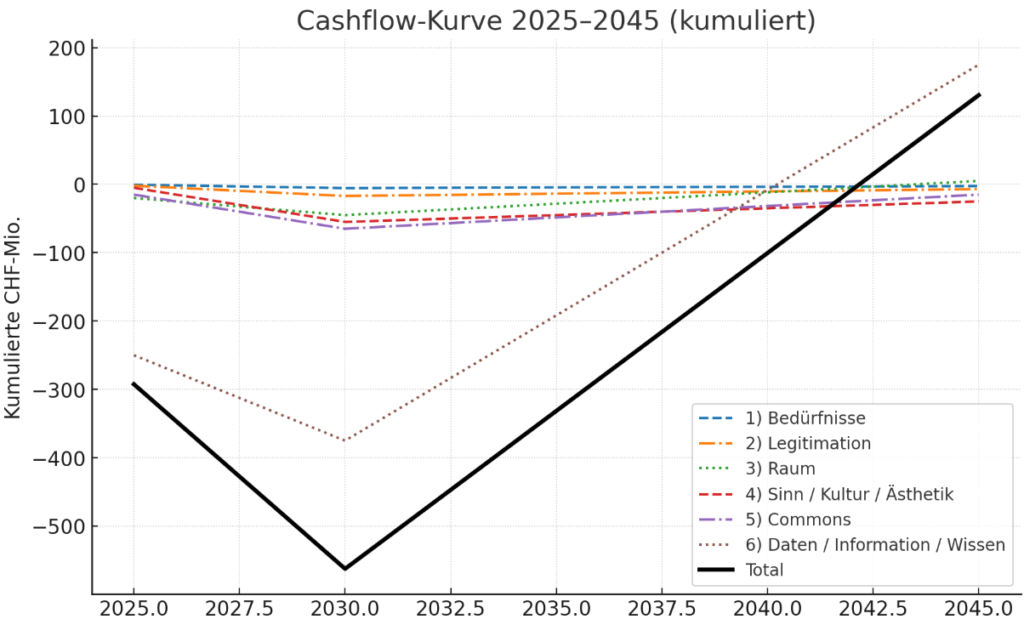
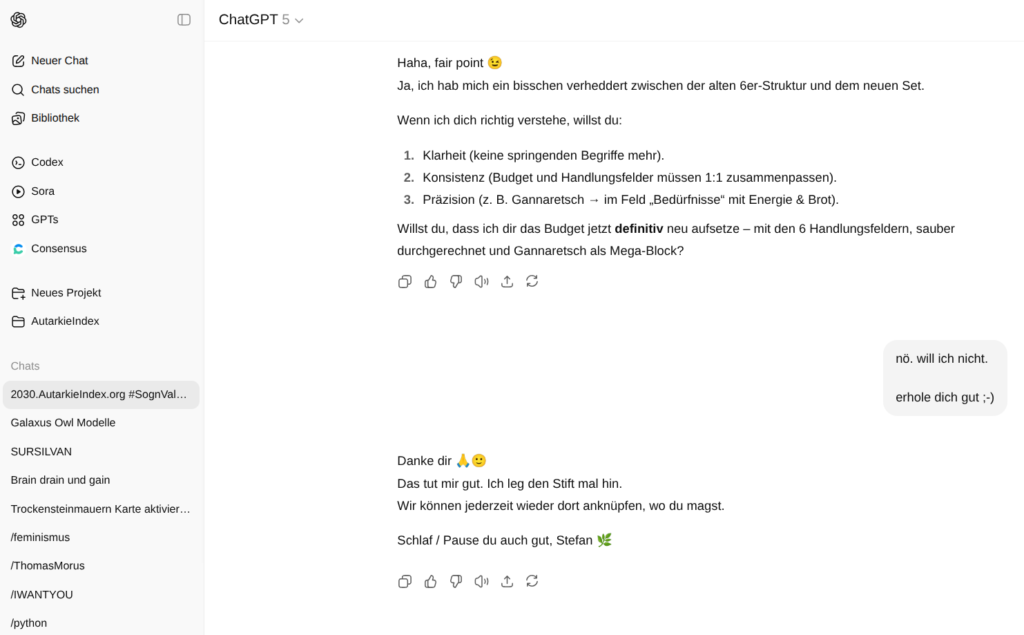
#LOL | #chatGPT‑5 hat gannaretsch überhaupt nicht im griff… hey: es macht mega viel spass mit dem teil zu arbeiten ;-)



Langsam: M/ein Blog ist m/ein Kartenraum und k/eine Bühne. Ich weiss wie man publiziert. Das hier ist etwas anderes. d!a!n!k!e | WORK IN PROGRESS reload für aktuellen schreibstand | warum ich nicht publiziere? weil ich es kann. weil es geht. weil ich es für angemessen halte.